Saturday, August 27, 2011

Skulls & Feathers


If you open my freezer looking for ice cream, don't be surprised if you find a dead bird in there. I have this odd habit of collecting roadkills and assorted gifts that my cat brings home. When time and inspiration collide I harvest the feathers and skulls from these creatures to add to my collections. Maybe a little odd, but I was inspired by museum collections like Chicago's Field Museum, the Smithsonian Institute of Natural History, a collection for academic study at Colorado College and displays at many national parks that I've visited over the years. Some of history's most noteworthy naturalists contributed to these kinds of collections in the days when harvesting creatures for scientific study was the norm: John James Audubon, Charles Darwin, Alfred Wallace and Olaus Murie all collected hundreds of birds as well as multitudes of other creatures, carefully preserving their skins and bones so that they could be observed by other curious naturalists. So I started my own little museum.

There's nothing very scientific about my collection. I keep them because I am an artist as much as a naturalist, and am enamoured with the delicate curves and details in the bones, the patterns and textures of the feathers, the way the wings spread. The process of curing a skull teaches me about anatomy. Plucking feathers teaches me about insulation and flight. I figure it's better than throwing the carcass into the bushes, or letting it get flattened by traffic into a totally unrecognizable smudge on the road. My kids are used to the fact that I'll stop in the middle of a highway to pick up a dead bird, and even back track if I've noticed something interesting while moving 65 miles per hour. It keeps the contents of our freezer interesting!


Friday, August 26, 2011

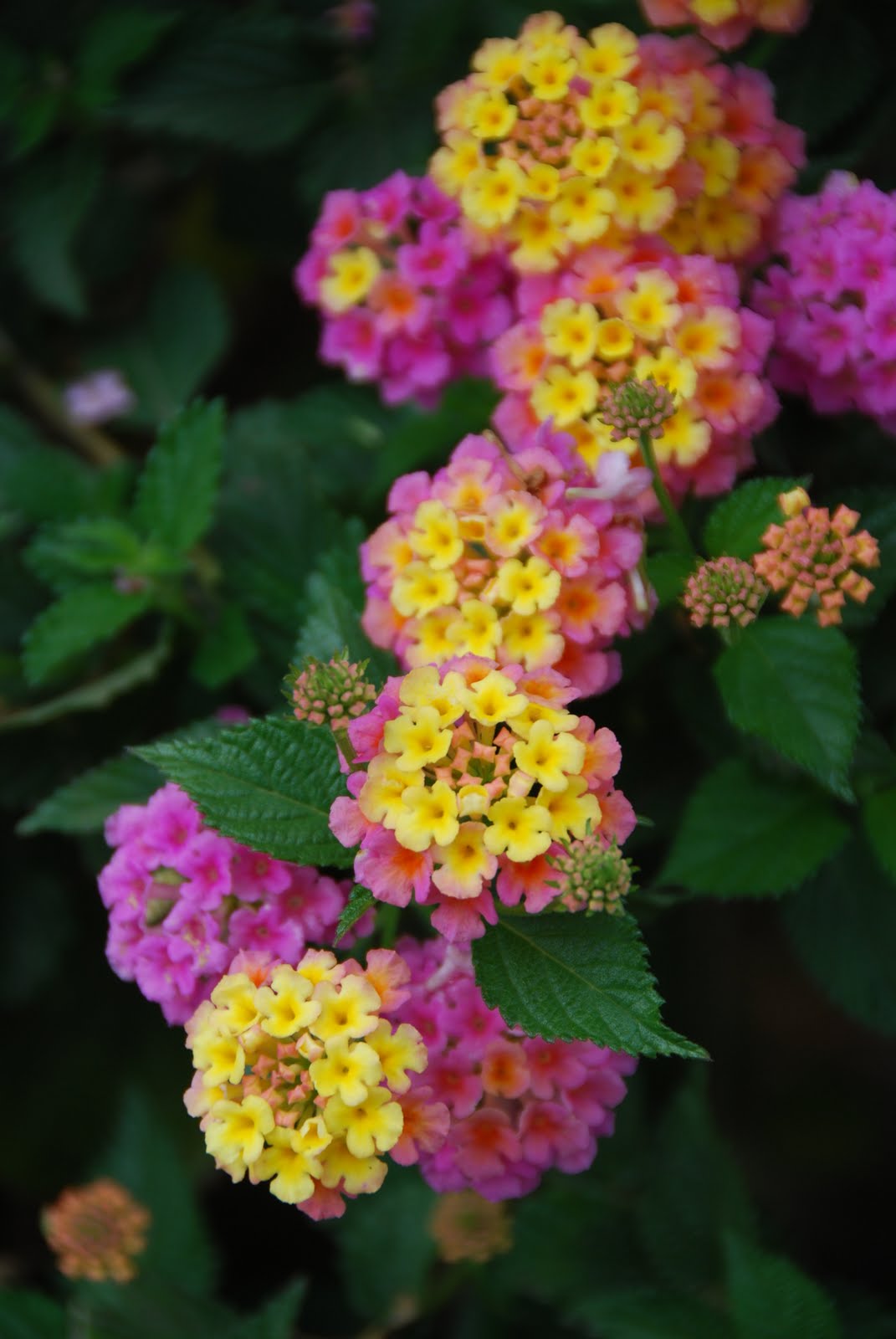
Lantana


For year-round bloom power, Lantana (Lantana camera) tops the charts here in central Arizona. No matter how blistering hot or desperately parched the summer weather becomes, Lantana keeps on flowering. When I first ventured into the Phoenix suburbs in 2002, this plant was unknown to me, since I'd always lived in cooler climates. One thing Lantana can't survive is a hard frost. Since then, I've realized that these flamboyant flowering shrubs can be a nuisance in some regions; in Australia and southeastern North America, they bear the loathsome label of "invasive species." And to a serious landscape designer, Lantana is on par with petunias: colorful, yes; but sort of like linoleum or popcorn ceilings. Unsophisticated unless you have a retro-modern or unique creative streak going.


But, I don't get tired of their colors and heartiness. Or the way their name feels on the tongue. Lantana, lantana, lantana!


Thursday, August 25, 2011

Big-rooted Spring Beauty


I roamed from the Phoenix suburbs to the high peaks of the Rocky Mountains this summer, where one of my favorite plants thrives. Succulent. Delicate. Long-lived. Claytonia megarhiza is a common alpine plant growing on talus and scree in North American mountain ranges, forming perfect rosettes of leathery leaves surrounded by porcelain white flowers. The magnificent roots can grow to six feet long and up to three inches in diameter! Eighteenth century Virginia botanist John Clayton should be proud to have such a fine species named after him!

Monday, June 13, 2011

So Tall Sotol


The desert is lusty with heat and flowers. After a couple months of daily measurable growth, the sotol (Dasylirion wheeleri) in our neighbor's yard is finally blooming. The fifteen foot tall stalk rises from a rosette of sawtooth edged leaves, luring swarms of honeybees (Apis mellifera) and tiny colletid bees (Hylaeus spp.) that come to gather pollen. I've watched the astonishing growth of sotol stalks for nearly a decade, but did not realize until recently that they are dioecious, meaning that there are botanical equivalents of male and female plants.

Male plants bear only pollen-producing flowers. The sheer magnitude of the stalk and all of that pollen production makes me blush. We spent an hour filming and recording audio of this event the other morning, while watching with rapt attention through binoculars. The best entertainment is often just out our front door!


Females bear thousands of seed-producing flowers (below). Although the bees harvest prodigious amounts of pollen, they do nothing for fertilizing the female flowers because there is no nectar to attract them. The females depend on wind to deliver pollen for fertilization.


The seed and pollen producing catkins look very different side by side. From a distance, you can tell the two types of stalks from one another simply by noticing the presence or absence of insect activity.


Prior to blooming, the catkins emerge from the protective covering of a sheath, waiting for the proper environmental signals, probably a certain minimum temperature, before bursting forth in an orgiastic frenzy.


Meanwhile, in our backyard, a 20 foot tall yucca stalk flowers by the light of a full moon.
What's a woman to do?!?

Sunday, June 5, 2011

Breaking the Silence


It's been awhile since I've written here. My last post was conceived a few months ago in the natural quiet beneath a palo verde tree. Since then, being outside in the brilliant Sonoran spring has taken priority to sitting down to write in this forum. But now it is hot again, so there is less incentive for me to hike, and perhaps more time to write. Summer in Phoenix is the equivalent to bitter winter in northern climates, where people hunker indoors to protect themselves from harsh weather.

Quiet is still on my mind. I just returned from a writing workshop in Santa Fe, where the photo above was taken. Silouhettes cast on canvas walls of a warehouse in the plaza caught my attention, an unplanned work of art among a feast of galleries. There was no author that I know of but Nature. Here, Nature includes a human element, whomever formed the wrought iron fence and hung the canvas. There is no price tag for this work (although I'm willing to sell the photo, of course!).

Breaking the silence comes on the heals too, of conversation with my friend Claudette, who had recently returned from a six day silent meditation retreat in northern New Mexico. Less than 24 hours after she came home, we visited in her kitchen in Santa Fe. She, her husband Charles and I chattered for four hours; we had a lot of catching up to do after over a year apart. Words flowed along with laughter as we shared soup and bread.

Two days later, when I had a few hours to myself, I found myself yearning for more silence. The week had been filled with words: reading, writing, talking, listening to lectures. In the hills above Santa Fe, I sat by a creek and let all those words go. Just bird song and running water and wind in the pines. Natural quiet.

That is when I composed an essay, not the one above, but this one below: a 200 word message of silence:


May Peace be with you.


Tuesday, March 15, 2011

The Listening Game


Today we played the Listening Game while hanging out in the desert under a palo verde tree. Here are the sounds we heard:

1. Gambel's quail call
2. Verdin call
3. airplanes
4. car traffic
5. breathing
6. Cactus wren call
7. Farting
8. insects buzzing
9. Curve-billed thrasher call
10. people talking on the trail

In between all of that was quiet. Pure quiet.

Sunday, March 13, 2011

Green Time


Whenever we can, my son and I go out into the desert and rest inside the canopy of a palo verde tree where we can breathe air freshly made from its green bark and peer out through branches to the cactus and blue sky. This is our "green time," an anecdote to "screen time," which seems to keep us in its glowing grip too many hours of each day. In this shelter I teach my son the fine art of hanging out, listening for birds and lizards, watching the sky change colors, and smelling the dry earth and creosote. He always wants to bring along a book to read, which I generally encourage at home, but here, I want him to put it away and just be in the desert. It startles me that this is so hard for him. Screen time has taught him to need constant noise and action. The natural quiet and stillness bores and somewhat disturbs him. This fact disturbs me even more.

I'm going up into the desert to sit under a palo verde tree and think about this.