Thursday, November 17, 2011

Tortoise Bones


Last week we found this scute, a section of shell from a Sonoran desert tortoise (Gopherus morafkai), lying at the edge of a trail we were biking on. Recognizing that it had to have been attached to a rather large tortoise, we explored the area and within minutes found the still smelly, decaying remains of an ancient male. Measuring 12” long and 8” wide (30cm x 20cm), this guy must have been in the upper end of the 80-100 year life span. The crack in his shell tells another story, perhaps a fatal tumble down the rocky hillside where he once roamed. A dozen more scutes were scattered about, although many are missing after three separate visits to look for the old one’s burrow, which we also haven’t found.


This is the second tortoise shell I’ve found in the Deem Hills, a desert island that backs up to the neighborhood we live in. The home of this desert tortoise is just a few blocks from my own; both are visible in this photo. Next time I cross paths with a wild tortoise, I hope that it’s a live one!


Through analysis of DNA and other characteristics, tortoises that live east and south of the Colorado River were recently distinguished from the Mojave desert tortoise (Gopherus agassizii) as a new species. Read more in this June 2011 scientific publication on tortoise taxonomy.

Wednesday, November 16, 2011

Signs of Spring


About half an inch of rain has drenched the central valley of Phoenix over the past month, which is plenty of moisture to excite seeds to germinate and dormant shrubs to leaf out. The well-armed branches of Ocotillo (Fouqueria splendens) are some of the first to respond to winter rains, transforming what appeared to be dead sticks into a splendid green wands.


On the desert floor, a carpet of seedlings is beginning to form. In the shade of shrubs and trees, around rocks and in swells of litter that were deposited by sheet flow of heavier rains, Burr Comb (Pectocarya recurvata) are some of the first to pop up. If we continue to be blessed with even an eighth of an inch every 10 days or so from now till March, this could be another banner year for desert wildflowers!

Tuesday, November 15, 2011

Wild Hive


We recently visited a wild hive of honeybees (Apis mellifera scutellata) nestled in a crack in lava cliffs just a ten minute walk from our house in Phoenix. Although we are warned that these bees are most likely “Africanized” and thus aggressive, I have never been chased or stung in the nine years that I’ve been observing this hive. Then again, I have never tried to steal their honey or poke the hive with a stick. These same bees are most likely the ones that are at work daily in the neighborhood, gathering nectar and pollen from our landscaping plants. Maybe they just recognize me as one of the friendly neighbors whose garden they come down to forage in every day!


Orion prefers to keep his distance from the bees. The dark cleft in the cliff is where the hive is hidden.

Friday, November 11, 2011

The Glorious Golden Scarab


We found this gilded beetle trundling in the duff along the Clear Creek Trail up near Verde Valley, Arizona a few weeks ago. The species was dubbed Chrysina gloriosa, or “glorious golden one,” one of 30,000 or so beetles in the scarab family. The Glorious Scarab is supposedly camouflaged by its gleaming exoskeleton as it feeds on the foliage of juniper trees. As grubs, they make a living chewing tunnels in decaying sycamore logs, most common in riparian habitats of southern Arizona.

My son, who aspires to be an entomologist, studies the elaborate appendages while drawing our specimen. This beetle was in its last hours, so is now preserved in Orion's insect collection.


I was surprised to find very little other information about these living jewels. Their much homelier distant cousins, the Egyptian dung beetle, Scarabaeus sacer, however, have earned the status of gods in Mediterranean mythology. As a symbol of the sun god, Ra, the scarab is plentiful in the hieroglyphics, jewelry and sculptures of ancient and modern Egypt.

If you are a Facebook user, search for Chrysina gloriosa, which has its very own fan page, and give it a thumbs up!

Tuesday, August 30, 2011

Ecogastronomics

Dinner at Finca Bella Vista in Costa Rica

"Ecogastronomics." When my daughter told me yesterday that she just registered for a college course with this title, my first thought was, "What the heck is ecogastronomics?" My second thought was, "Why is this a credited course at a University?" My third thought was "When is that girl going to get serious about her college career and start working on a "real" major!?"

Thus, I found myself awake in the middle of the night, once again, Googling for information, where all of my questions seem to find an answer these days. Ecogastronomics, by simple linguistic analysis, is the study of the ecology and economics of food. Okay, I thought, that is definitely relevant. To answer my second question, it turns out that the University of New Hampshire made the news back in 2008 by pioneering Ecogastronomy as an official major area of study. Their aim is to integrate the study of agriculture, nutrition and food services management into a course that examines the effects of our food choices on local and global scales. Or something like that. Michael Pollan's books, "The Omnivore's Dilemma" and "Food Rules" are obvious choices for primary texts; the "Slow Food Movement" is the philosophical foundation of this new trend of study.

My third question does not have an answer on the Internet, but I realized that one of the reasons my daughter chose to go to college is to explore the world beyond the heavily plodded pathways of "normal" careers and lifestyles. These first two years are a golden opportunity to learn about other cultures and topics that just aren't part of the standard middle class American public school system. Yoga, Argentine Tango, Vietnamese History, Western Philosophy, Photojournalism and now, Ecogastronomy, are somehow colluding into something unique and exciting for Brooke. I can't wait to see what she cooks up!

So now I turn to my pantry and refrigerator and ponder the idea of ecogastronomy in my own life. As I snack on almonds (from California) and sip my Yerba Mate (from Argentina), I'm intrigued at how most of our food has absolutely no ecological relationship to the local landscape. Phoenix is no longer well known for it's agriculture, although Cattle and Citrus were once the economic engines of the region. My veggie gardening skills are weak. However, I do have a bag of mesquite flour in my freezer, ground from seed pods that I gathered in my front yard. Might mesquite be a key ingredient in the restoration of ecological and economic sustainability here in the Sonoran Desert? And maybe a culinary ingredient that could be reintroduced to the local culture?

Mesquite bean pods


Some nutritionists of aboriginal cultures suggest that restoring indigenous food cultures could cure a lot of health problems, such as diabetes and obesity. In that case, I'd like to live wherever cacao is part of the native ecosystem!


Saturday, August 27, 2011

Skulls & Feathers


If you open my freezer looking for ice cream, don't be surprised if you find a dead bird in there. I have this odd habit of collecting roadkills and assorted gifts that my cat brings home. When time and inspiration collide I harvest the feathers and skulls from these creatures to add to my collections. Maybe a little odd, but I was inspired by museum collections like Chicago's Field Museum, the Smithsonian Institute of Natural History, a collection for academic study at Colorado College and displays at many national parks that I've visited over the years. Some of history's most noteworthy naturalists contributed to these kinds of collections in the days when harvesting creatures for scientific study was the norm: John James Audubon, Charles Darwin, Alfred Wallace and Olaus Murie all collected hundreds of birds as well as multitudes of other creatures, carefully preserving their skins and bones so that they could be observed by other curious naturalists. So I started my own little museum.

There's nothing very scientific about my collection. I keep them because I am an artist as much as a naturalist, and am enamoured with the delicate curves and details in the bones, the patterns and textures of the feathers, the way the wings spread. The process of curing a skull teaches me about anatomy. Plucking feathers teaches me about insulation and flight. I figure it's better than throwing the carcass into the bushes, or letting it get flattened by traffic into a totally unrecognizable smudge on the road. My kids are used to the fact that I'll stop in the middle of a highway to pick up a dead bird, and even back track if I've noticed something interesting while moving 65 miles per hour. It keeps the contents of our freezer interesting!


Friday, August 26, 2011

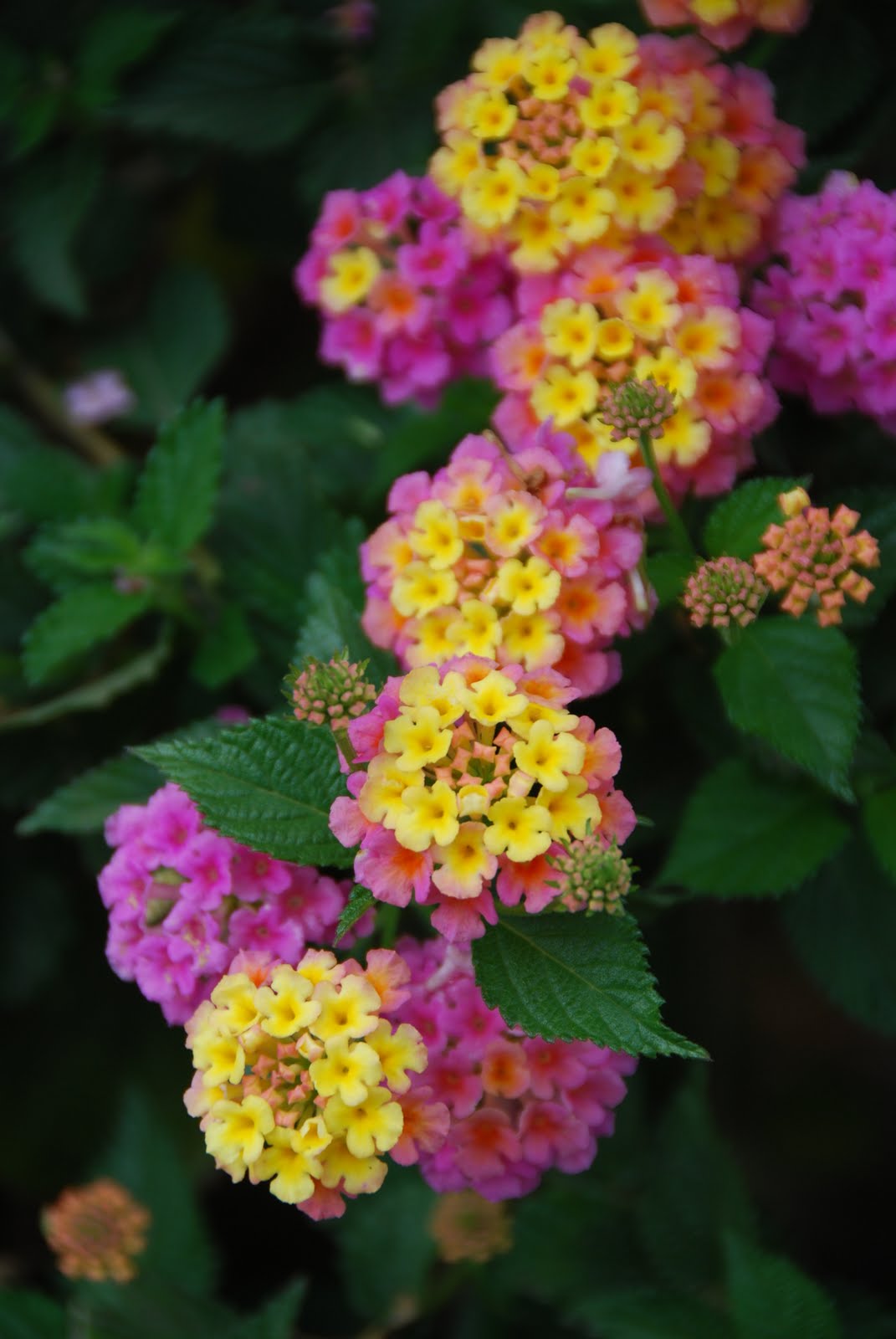
Lantana


For year-round bloom power, Lantana (Lantana camera) tops the charts here in central Arizona. No matter how blistering hot or desperately parched the summer weather becomes, Lantana keeps on flowering. When I first ventured into the Phoenix suburbs in 2002, this plant was unknown to me, since I'd always lived in cooler climates. One thing Lantana can't survive is a hard frost. Since then, I've realized that these flamboyant flowering shrubs can be a nuisance in some regions; in Australia and southeastern North America, they bear the loathsome label of "invasive species." And to a serious landscape designer, Lantana is on par with petunias: colorful, yes; but sort of like linoleum or popcorn ceilings. Unsophisticated unless you have a retro-modern or unique creative streak going.


But, I don't get tired of their colors and heartiness. Or the way their name feels on the tongue. Lantana, lantana, lantana!